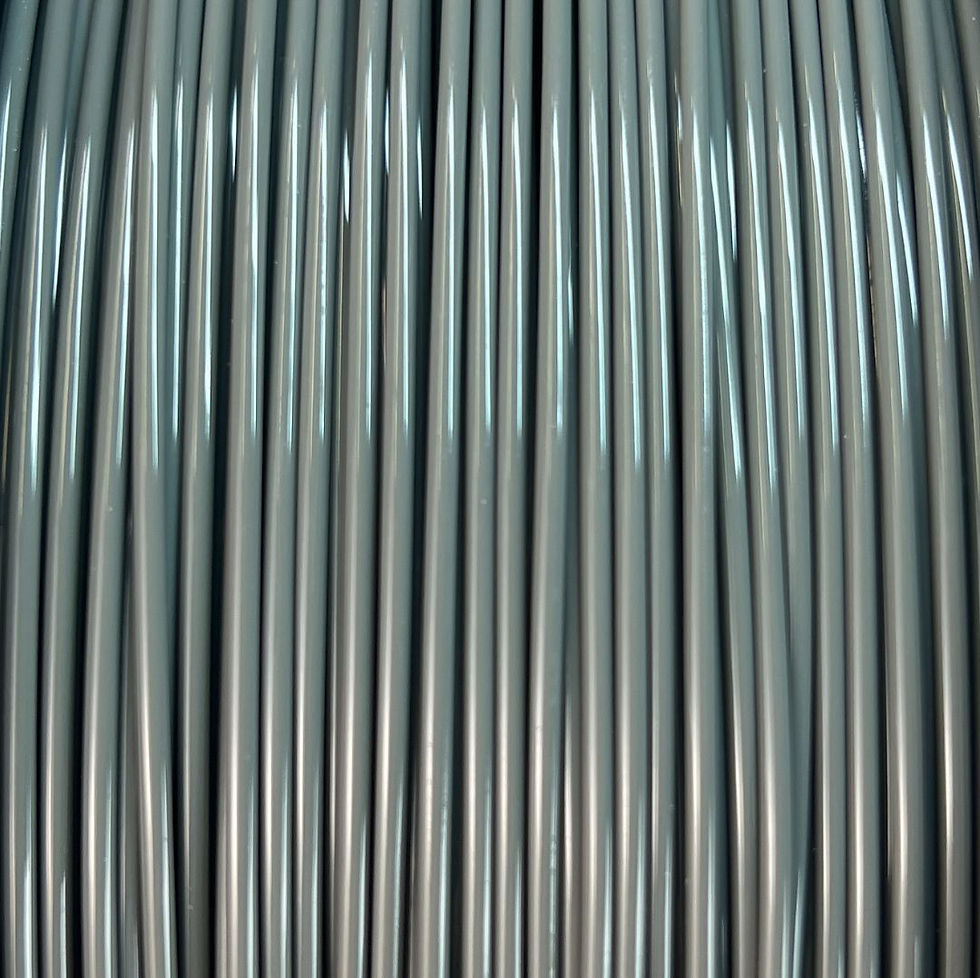
PLAx CF is a sustainable, modified PLA reinforced with 10% carbon fibers, made from recycled industrial waste from Europe. We have taken great care to develop a consistently high-quality material for you. Thanks to its impact modification, PLAx CF offers increased tensile and fracture resistance similar to ABS – while maintaining the typical printing properties you know from PLA.
This material is ideal for printing technical parts with FDM technology. Choose your eco-friendly, high-quality 3D printing filament without compromising on quality and performance!


Highlights of Nobufil PLAx CF Filament
- Enhanced impact resistance compared to standard PLA
- Very good layer adhesion
- Easy printing even with an open build chamber
- Higher stiffness through the addition of carbon fibers
- Visually appealing surface and high detail accuracy
- Almost odorless
- Low warping
Print settings:
- Print temperature: 225°C ± 10
- Bed temp: 65°C ± 10
- Printing surface: textured PEI sheet
- Fan speed: 20-60%
- Hardened nozzle required
Datenblätter unserer Produkte zum Download finden Sie hier >
Nobufil PLAx CF Anthracite Filament 1 kg 1.75 mm
Für Großhändler & B2B-Kunden: Jetzt Angebot anfragen – wir kümmern uns persönlich um Ihr Anliegen.